Most Renovations Don’t Pay You Back. These Are the Ones That Do.
Renovation decisions in Beverly Hills rarely come down to budget alone. At this level of the market, the real question isn’t can I afford this — it’s will this investment hold its value, and will it actually move the needle when I sell?
It’s a question worth taking seriously, because the answer isn’t always obvious. Homeowners in 90210 routinely spend $200,000 on renovations that appraisers and buyers discount at resale. Not because the work was poor — but because they chose the wrong projects for their market, their home’s price tier, and the timing of their eventual sale.
The good news: there’s a clear pattern of what works. Certain renovations in the Beverly Hills luxury market consistently deliver outsized returns — both in measurable resale value and in the quality of life they provide while you’re still living there. Fall 2026 is an ideal time to execute them.
This guide breaks down the highest-ROI remodels for Beverly Hills homes, what they realistically cost, what they return, and how to approach them strategically.
How ROI Is Measured Differently in the Beverly Hills Luxury Market
Before diving into specific projects, it’s worth establishing how return on investment actually works in this market — because the 90210 luxury tier behaves differently from national renovation ROI averages.
National ROI benchmarks (like those published annually by Remodeling Magazine) are calculated on median-priced homes across all US markets. They systematically understate returns in luxury markets where buyers are highly quality-sensitive and where a poorly maintained or dated home carries a significant discount.
In Beverly Hills, ROI has two dimensions:
1. Hard ROI — measurable increase in appraisal value or sale price directly attributable to the renovation. This is the number most homeowners focus on.
2. Soft ROI — reduced days on market, ability to attract a specific caliber of buyer, pricing power during negotiation, and the ability to list without concessions or credits. In a market where a deal falling out of escrow costs significant time and carrying costs, soft ROI is real money.
The projects below are ranked because they deliver on both dimensions in the Beverly Hills market specifically — not because they top a national survey.
The 7 Highest-ROI Remodels for Beverly Hills Homes This Fall
1. Kitchen Renovation: The Anchor of Luxury Resale Value
Estimated Cost: $100,000 – $400,000 Estimated ROI: 70–85% hard return; significant soft ROI in buyer attraction and negotiating position
No single renovation does more for a Beverly Hills home’s resale performance than a kitchen that genuinely reflects the market tier. Buyers at the $4M–$15M price point are making a lifestyle statement with their purchase — and a kitchen that reads dated, regardless of how functional it is, creates a psychological discount that permeates the entire showing experience.
What moves the needle in 2026:
- Full custom cabinetry in current finishes (warm earth tones, painted wood, natural walnut) — not semi-custom or stock
- Natural stone countertops — quartzite and leathered marble are outperforming engineered quartz in buyer perception at the luxury tier
- Professional-grade integrated appliances — Sub-Zero, Wolf, Miele, or La Cornue — with panel-ready refrigeration and dishwashers that disappear into the cabinetry
- A scullery or prep kitchen behind the main kitchen — now an expected feature in Beverly Hills homes above $5M
- Bespoke lighting — layered ambient, task, and accent circuits on dedicated dimmers, not builder-grade fixtures
The kitchen renovation that performs best at resale isn’t the flashiest — it’s the one that feels completely resolved, where every detail has been considered and nothing feels like an afterthought.
Fall advantage: Cabinet lead times ordered in September arrive in November, keeping the project on track for a January or February finish — right before the spring selling season.
2. Primary Bathroom Transformation: Where Buyers Make Emotional Decisions
Estimated Cost: $60,000 – $200,000 Estimated ROI: 65–80% hard return; high soft ROI — primary bath condition is a top-three factor in luxury buyer decisions
In the Beverly Hills luxury market, the primary bathroom is a proxy for the entire home’s quality. Buyers walk into a primary bath and make a rapid, emotional assessment: does this feel like a sanctuary, or does it feel like maintenance?
A dated primary bathroom doesn’t just affect the bathroom’s perceived value — it depresses the buyer’s perception of the entire home and invites credit requests that exceed the actual renovation cost.
The renovations that perform best at resale:
- Steam shower with large-format natural stone — slab-matched walls and floors, frameless glass, linear drain
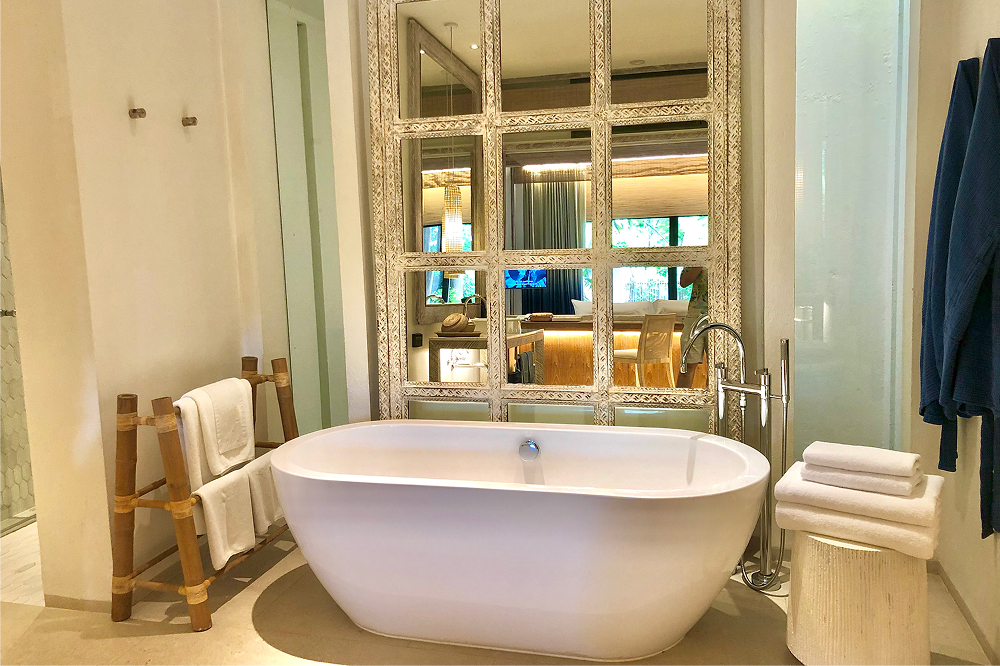
- Freestanding soaking tub positioned as a focal point, ideally with a view
- Heated floors with dual-zone thermostat control — now a baseline expectation, not a luxury upgrade
- Floating vanities with integrated lighting and under-cabinet illumination
- High-end fixtures from Waterworks, Kohler Luxury, or THG Paris — buyers notice the difference
What’s equally important: the secondary bathrooms. A spectacular primary bath with dated hall baths creates a dissonance that sophisticated buyers pick up immediately. Budget for at least a refresh of secondary baths — new fixtures, new tile in the shower, updated vanity — when you’re completing the primary.
3. ADU Addition: The Investment That Pays While You Own It
Estimated Cost: $180,000 – $420,000 Estimated ROI: 80–120% in added appraised value; ongoing rental income of $3,500–$8,500/month in Beverly Hills
The ADU — accessory dwelling unit — is the only renovation on this list that generates income while you still own the property. A well-designed, fully permitted ADU in Beverly Hills adds appraised value that often approaches or exceeds construction cost, because appraisers now apply income capitalization methodology to ADUs in markets with documented rental demand.
Beverly Hills is one of those markets. High-quality, permitted ADUs in 90210 rent for $3,500–$8,500 per month depending on size, finish, and proximity to amenities. At those rates, an ADU can recover its construction cost in 3–5 years through rental income alone — before accounting for any increase in property value.
The strategic nuances for Beverly Hills:
- Permitting is non-negotiable. Unpermitted ADUs don’t count toward appraised square footage and create title issues at sale. The permit process in Beverly Hills is manageable — a contractor experienced in the city’s requirements can navigate it without significant delays.
- Finish level matters. A Beverly Hills ADU that looks like an afterthought doesn’t command premium rents. Finishes consistent with the main home — quality fixtures, real hardwood or tile floors, proper kitchen and bath — are what generate top-of-market rental income.
- Garage conversions and detached structures both work well in Beverly Hills. Your site conditions and HOA requirements will determine which makes more sense.
Fall is ideal for ADU starts because the permit process can run concurrently with design and material selection through September and October, positioning groundbreaking for November with the bulk of construction in the winter months when crews are most available.
4. Outdoor Living Renovation: Beverly Hills’ Highest Soft-ROI Project
Estimated Cost: $60,000 – $350,000+ Estimated ROI: 60–75% hard return; exceptionally high soft ROI — outdoor spaces are a primary differentiator in Beverly Hills luxury showing
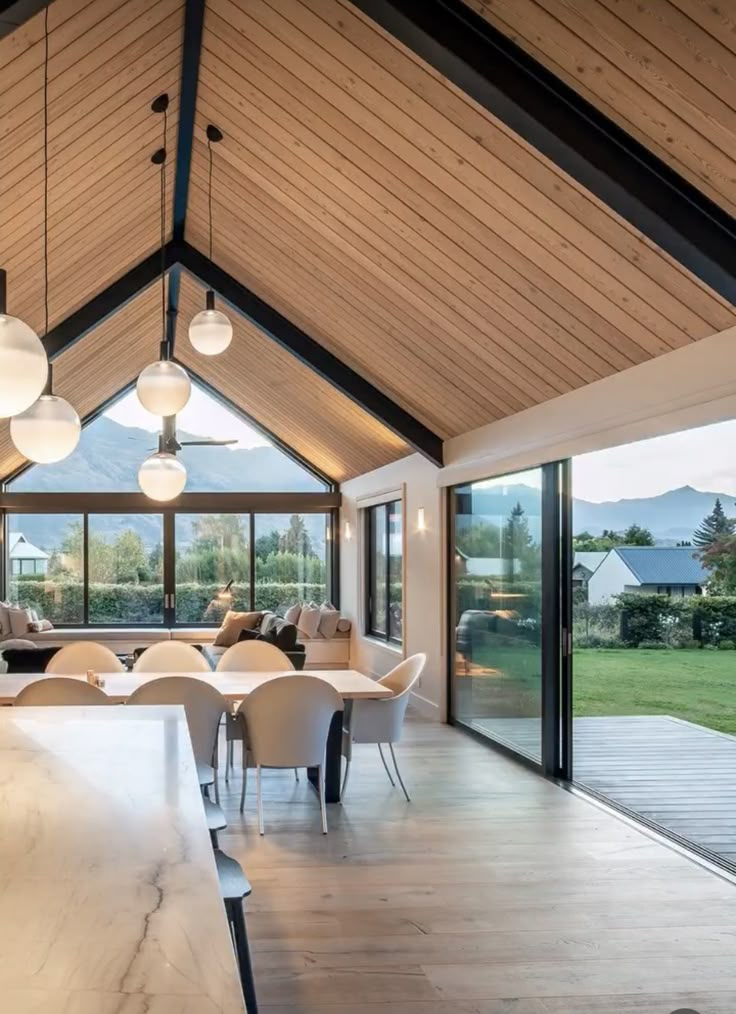
Beverly Hills buyers expect outdoor living spaces. What they’re comparing isn’t whether you have one — it’s how well it was designed, how fully it was realized, and whether it functions as an extension of the home’s living area or just a patio with some furniture.
The outdoor renovations that genuinely move buyers in this market:
Pool renovation or enhancement: Resurfacing with pebble finish or exposed aggregate, adding a tanning ledge, installing perimeter overflow, adding fire features at the water’s edge, and integrating the pool deck with outdoor entertaining areas. A tired pool deck can quietly cost $100,000–$300,000 in buyer offers. A compelling one earns back multiples of renovation cost in buyer enthusiasm.
Covered outdoor kitchen: Not a grill station — a fully designed, plumbed outdoor kitchen with commercial cooking equipment, outdoor refrigeration, a bar area, and weatherproof cabinetry. Buyers in the $5M+ range who entertain frequently look for this specifically.
Landscape and lighting design: Professional landscape design with mature specimen plantings, exterior lighting that runs off a programmable system, and a cohesive hardscape plan is the difference between a home that photographs at its best and one that photographs at its worst. First impressions are almost entirely formed by the exterior.
September is the single best month to start outdoor projects — mild temperatures, dry conditions, and contractor availability all peak simultaneously.
5. Smart Home Infrastructure: The Invisible ROI Driver
Estimated Cost: $40,000 – $180,000 Estimated ROI: 50–70% hard return; strong soft ROI with tech-forward buyers; increasingly a buyer expectation above $5M
A fully integrated smart home system — Savant, Crestron, or Control4 at the luxury tier — no longer reads as a bonus feature in the Beverly Hills market. At the $5M+ price point, buyers expect whole-home automation. A home without it invites a discount or a credit request to install it after purchase.
The infrastructure that delivers real resale value:
- Lighting control (Lutron Homeworks QSX): Whole-home lighting on programmed scenes, circadian rhythm presets, and remote access. Buyers can see and feel the difference the moment they walk in.
- Whole-home AV: Multi-zone audio and video that operates through a single, intuitive interface. The systems that impress are the ones that just work — no complicated remote, no system crashes mid-showing.
- Automated shading: Motorized shades integrated with lighting and time-of-day programming. In Beverly Hills, where solar exposure management matters both for comfort and for energy cost, this is a practical feature with visible appeal.
- Energy management: Smart HVAC zoning, real-time energy monitoring, and EV charging infrastructure. Increasingly, buyers are asking specifically about EV capability. A home with a Level 2 charger already installed removes a friction point from the purchase decision.
The key ROI principle with smart home: integration matters more than features. A home with five disconnected smart home systems feels more chaotic than one with fewer, seamlessly integrated ones. Cohesion is the differentiator.
6. Interior Painting and Finish Refresh: The Highest ROI by Dollar Spent
Estimated Cost: $15,000 – $55,000 Estimated ROI: 100–150% in buyer perception; transforms showing quality at the lowest cost of any renovation
This is the renovation most Beverly Hills homeowners overlook because it feels too simple — and it’s the one that consistently delivers the most return per dollar spent.
Fresh interior paint in current, sophisticated color palettes (warm whites, warm greiges, muted earth tones — not stark whites or trendy colors that date quickly) resets a home’s visual baseline. It makes spaces feel larger, cleaner, and more intentional. It neutralizes the smell of accumulated occupancy. It gives buyers permission to imagine themselves in the home rather than spending the showing thinking about what they’d change.
Pair interior paint with:
- Hardwood floor refinishing — stained in a current tone (medium warm brown, natural, or white oak) rather than the orange-toned finish common in early 2000s installations
- Millwork updates — replacing dated crown molding profiles, adding wainscoting or paneled walls in key rooms, refinishing or replacing interior doors and hardware
- Fixture updates — switching out builder-grade light fixtures, door hardware, and bathroom accessories to cohesive, design-forward choices
A well-executed interior refresh on a Beverly Hills home takes 3–5 weeks and can dramatically change how a home shows — both in listing photography and in person.
7. Energy Efficiency Upgrades: ROI That Compounds Over Time
Estimated Cost: $25,000 – $120,000 (depending on scope) Estimated ROI: 55–75% hard return; federal and California tax credit eligibility; documented energy savings for buyer marketing
Energy efficiency has moved from nice-to-have to genuine resale factor in the Beverly Hills market. California’s energy mandate trajectory, rising utility costs, and an increasingly sustainability-conscious buyer pool at the luxury tier have made documented energy performance a real differentiator.
The upgrades with the clearest ROI:
- Solar panel installation: In a market with Beverly Hills’ utility rates, a properly sized solar installation cuts electricity costs substantially. More importantly, it’s a marketing asset — buyers can be shown actual savings documentation, not projections.
- High-efficiency HVAC replacement: Replacing aging systems with modern, properly zoned, variable-speed systems improves comfort, reduces energy cost, and eliminates the “what systems are going to need replacing” concern that sophisticated buyers always raise.
- Whole-home insulation and air sealing: Older Beverly Hills homes — many built in the 1950s through 1970s — are often under-insulated. A thermal performance upgrade makes the home quieter and more comfortable, reduces HVAC demand, and can be documented in an energy audit for marketing purposes.
- EV charging infrastructure: A Level 2 EV charger in the garage is a $2,000–$5,000 installation that removes a meaningful objection for a growing segment of luxury buyers. It also qualifies for federal tax credits.
Common Mistakes That Kill ROI on Beverly Hills Renovations
Renovating for Personal Taste, Not the Market
The renovation that makes your home perfect for you may not be the renovation that commands a premium when you sell. Dark, dramatic kitchens are a personal favorite for some homeowners and a buyer deterrent for others. Finish choices that are highly specific to one aesthetic — ultra-modern, maximalist, highly themed — narrow the buyer pool. The highest-ROI renovations are those with broad, sophisticated appeal.
Over-Improving for the Street
Beverly Hills has significant price variation street-to-street and block-to-block. Spending $400,000 on a kitchen in a home that will sell for $3.5M regardless of renovation doesn’t produce the same return as the same kitchen in a home positioned to sell for $7M. Know your ceiling before you set your renovation budget.
Neglecting the Exterior While Upgrading the Interior
First impressions determine whether buyers walk into a showing excited or already looking for problems. An immaculate interior behind dated landscaping, a worn driveway, or faded exterior paint is a showing experience that consistently underperforms. Allocate budget to curb appeal as part of every renovation plan.
Choosing Finishes That Date Quickly
Trend-forward renovations look exceptional in their first year and can read dated within three to five. For resale-focused renovations, select materials and finishes that are current but timeless — natural stone over highly patterned tile, warm neutrals over bold colors, quality fixtures from heritage brands over trendy design-forward pieces.
Skipping Professional Staging After Renovation
A renovated Beverly Hills home that’s not professionally staged consistently sells for less than an equally renovated, well-staged one. Staging communicates scale, lifestyle, and possibility. Budget for professional staging as part of your renovation-to-sale plan — it’s one of the highest-ROI expenditures in the entire process.
FAQ: High-ROI Remodels for Beverly Hills Homes
Kitchen renovations consistently deliver the highest combined hard and soft ROI in the Beverly Hills luxury market — typically 70–85% hard return with outsized impact on buyer attraction, days on market, and negotiating position. ADU additions are increasingly competitive with kitchen renovations in total return when rental income is factored in.
The right renovation budget depends on your home’s current condition, price tier, and target buyer. As a general principle, avoid over-improving beyond your comparable sale ceiling. A common framework: spend no more than 10–15% of expected sale price on pre-sale renovations, prioritizing cosmetic improvements with broad buyer appeal (paint, flooring, kitchen and bath refresh) before structural or luxury additions.
Not automatically. Renovations that increase value are those that address genuine buyer objections, match the market tier, and are executed with quality materials and workmanship. Poorly chosen renovations, over-improvements for the street, or projects with highly personal finishes can fail to add value — or in some cases, actively narrow the buyer pool.
In most cases, yes — particularly if you plan to own the property for at least three to five years before selling. A permitted ADU adds appraised value, generates rental income, and is increasingly expected by buyers in the 90210 market. The key is full permitting, quality construction, and finishes consistent with the main home.
In the Beverly Hills luxury market, a full kitchen renovation typically returns 70–85% of its cost in measurable appraised or sale value. However, the soft ROI — in buyer attraction, reduced days on market, and fewer concession requests — often pushes total effective ROI well above 100% when calculated against the cost of carrying an unsold or discounted property.
This depends on your home’s current condition and your timeline. Homes that are structurally sound and cosmetically fresh (current paint, updated kitchen and bath, clean exterior) can often sell competitively as-is in a strong market. Homes with dated finishes, deferred maintenance, or features that signal significant buyer investment required typically benefit from targeted pre-sale renovation. Consult with a Beverly Hills luxury real estate agent before deciding — the right answer is property-specific.
Interior paint and finish refresh (3–5 weeks), flooring refinishing (2–3 weeks), and fixture and hardware updates (1–2 weeks) are the fastest projects with meaningful impact. Kitchen and bathroom renovations run 10–20 weeks. For September starts targeting a spring listing, kitchen, bath, and outdoor projects all complete well within that timeline.
Your Renovation Investment Deserves a Strategic Plan
Not every renovation is worth doing. Not every dollar spent on a Beverly Hills home comes back at sale. But the projects in this guide — selected for their proven performance in the 90210 luxury market — consistently deliver returns that justify the investment and enhance the experience of living in the home while you own it.
The question isn’t whether to renovate. It’s which projects to prioritize, how to sequence them, and how to execute them with the quality and market awareness that the Beverly Hills luxury tier demands.
Fall 2026 is the right window. Contractor availability is strong, permit timelines are favorable, and a project started in September positions you for a finished home well before the spring real estate season accelerates.
The homeowners who come out ahead are the ones who start the right projects at the right time — with the right team. If you’re ready to explore what a high-ROI renovation looks like for your specific property, now is the time to have that conversation.